
Soba noodles, a staple in Japanese cuisine, offer a delightful culinary experience with their unique flavor and versatility. Made primarily from buckwheat flour, these noodles have a rich history and are enjoyed in a variety of dishes, both hot and cold. Whether you're a seasoned foodie or new to Japanese food, understanding soba Japanese noodles opens a door to a world of delicious possibilities. This guide explores everything about soba, from its origins and nutritional benefits to cooking techniques and popular dishes. Let's dive in and discover the wonders of soba!
What is Soba?
Definition and Origins of Soba Noodles
Soba, written as 蕎麦 in Japanese, refers to thin noodles made primarily from buckwheat flour. These noodles are a significant part of Japanese culinary history, with their origins tracing back to the Jomon period (13,000-300 BC) when buckwheat was first cultivated in Japan. However, it wasn't until the Edo period (1603-1868) that soba became a popular dish, particularly in urban areas like Edo (modern-day Tokyo). Soba was initially consumed as sobagaki, a buckwheat dumpling, but eventually evolved into the noodle form we know today. The popularity of soba soared because it was a nutritious and affordable meal for the working class. Soba shops, known as soba-ya, became common gathering places, serving both hot and cold noodle dishes. Today, soba remains a beloved food in Japan, enjoyed by people of all ages and backgrounds. Its cultural significance is evident in traditions like Toshikoshi Soba, where soba noodles are eaten on New Year's Eve to symbolize longevity and good luck.
Nutritional Information and Health Benefits
Soba noodles are not only delicious but also offer several nutritional benefits. The primary ingredient, buckwheat, is a nutritional powerhouse, rich in vitamins, minerals, and antioxidants. Here's a breakdown of the nutritional advantages of soba:
- High in Fiber: Buckwheat is an excellent source of dietary fiber, which aids in digestion, promotes gut health, and helps regulate blood sugar levels.
- Rich in Minerals: Soba contains essential minerals such as magnesium, iron, and zinc, which are vital for various bodily functions, including energy production, immune support, and oxygen transport.
- Good Source of Protein: Buckwheat provides a good amount of plant-based protein, essential for muscle building and repair.
- Antioxidants: Buckwheat is packed with antioxidants like rutin and quercetin, which help combat oxidative stress and reduce the risk of chronic diseases.
- Gluten-Free Option: Pure buckwheat soba noodles are naturally gluten-free, making them a suitable alternative for individuals with gluten intolerance or celiac disease. However, it's essential to check the ingredient list, as some soba noodles may contain wheat flour.
Incorporating soba noodles into your diet can contribute to overall health and well-being. The combination of fiber, minerals, and antioxidants makes soba a nutritious choice for a balanced meal.
Different Types of Soba Noodles
Soba noodles come in various types, each with its unique characteristics and flavor profile. The differences mainly stem from the proportion of buckwheat flour used and the addition of other ingredients. Here are some common types of soba noodles:
- Ju-wari Soba (十割そば): Made with 100% buckwheat flour, Ju-wari soba offers the most authentic buckwheat flavor and a slightly coarser texture. Due to the lack of gluten, these noodles can be more challenging to make and require skilled craftsmanship.
- Hachi-wari Soba (八割そば): Consisting of 80% buckwheat flour and 20% wheat flour, Hachi-wari soba strikes a balance between flavor and texture. The addition of wheat flour makes the noodles easier to handle and gives them a smoother consistency.
- Ni-hachi Soba (二八そば): This type contains 20% buckwheat flour and 80% wheat flour. Ni-hachi soba is more common and widely available, offering a milder buckwheat flavor and a smoother, more elastic texture.
- Kawakiri Soba (川切りそば): This refers to soba noodles that are thinly sliced, almost translucent. The thinness enhances the texture and allows for better absorption of flavors from the broth or dipping sauce.
- Cha Soba (茶そば): These green-colored soba noodles are infused with matcha (green tea) powder, adding a subtle tea flavor and vibrant color. Cha soba is often served cold and is a refreshing choice during the summer months.
- Goma Soba (ごまそば): Goma soba incorporates sesame seeds or sesame oil into the dough, imparting a nutty flavor and aroma to the noodles. These noodles are commonly served in sesame-based sauces.
The type of soba you choose can significantly impact the overall taste and texture of your dish. Experimenting with different varieties allows you to appreciate the nuances of soba and find your preferred style.
How to Cook Soba Noodles
Basic Cooking Instructions for Soba
Cooking soba noodles is a straightforward process, but achieving the perfect texture requires attention to detail. Here's a step-by-step guide to cooking soba:
Following these basic instructions will help you cook soba noodles to perfection, ensuring a delightful dining experience.
Tips for Achieving Perfect Texture
Achieving the perfect texture for soba noodles is an art that requires a few key techniques. Here are some tips to help you master the art of cooking soba:
- Use Plenty of Water: Using an adequate amount of water is essential to prevent the noodles from sticking together and ensure even cooking.
- Don't Overcook: Overcooked soba noodles become mushy and lose their pleasant chewiness. Keep a close eye on the cooking time and test the noodles frequently.
- Rinse Thoroughly: Rinsing the cooked soba noodles under cold water is crucial to remove excess starch and stop the cooking process. This step prevents the noodles from becoming sticky and ensures they maintain their al dente texture.
- Adjust Cooking Time: The cooking time may vary depending on the type and thickness of the soba noodles. Always refer to the package instructions and adjust the cooking time accordingly.
- Ice Bath for Cold Noodles: For cold soba dishes, consider placing the rinsed noodles in an ice bath for a few minutes. This will further enhance their firmness and create a refreshing texture.
By following these tips, you can consistently achieve the ideal texture for your soba noodles, whether you're serving them hot or cold.
Serving Suggestions: Hot vs. Cold
Soba noodles can be enjoyed in a variety of ways, both hot and cold, each offering a unique culinary experience. The choice between hot and cold preparations often depends on personal preference and the season. Here's a comparison of serving suggestions for hot and cold soba:
Hot Soba (Atsui Soba):
- Broth-Based Soups: Hot soba is commonly served in a flavorful broth, typically made from dashi (Japanese soup stock), soy sauce, and mirin (sweet rice wine).
- Toppings: Popular toppings for hot soba include sliced green onions, tempura, kamaboko (fish cake), and seasoned seaweed.
- Hearty and Warming: Hot soba dishes are perfect for colder months, providing a comforting and warming meal.
- Kake Soba: A simple yet satisfying dish consisting of soba noodles in hot broth, garnished with green onions.
- Tempura Soba: Soba noodles served in hot broth with crispy tempura (battered and deep-fried seafood or vegetables).
Cold Soba (Tsumetai Soba):
- Dipping Sauce: Cold soba is typically served with a chilled dipping sauce called tsuyu, made from dashi, soy sauce, and mirin.
- Condiments: Common condiments for cold soba include grated daikon radish, wasabi, and green onions, which are added to the dipping sauce.
- Refreshing and Light: Cold soba dishes are ideal for warmer months, offering a refreshing and light meal.
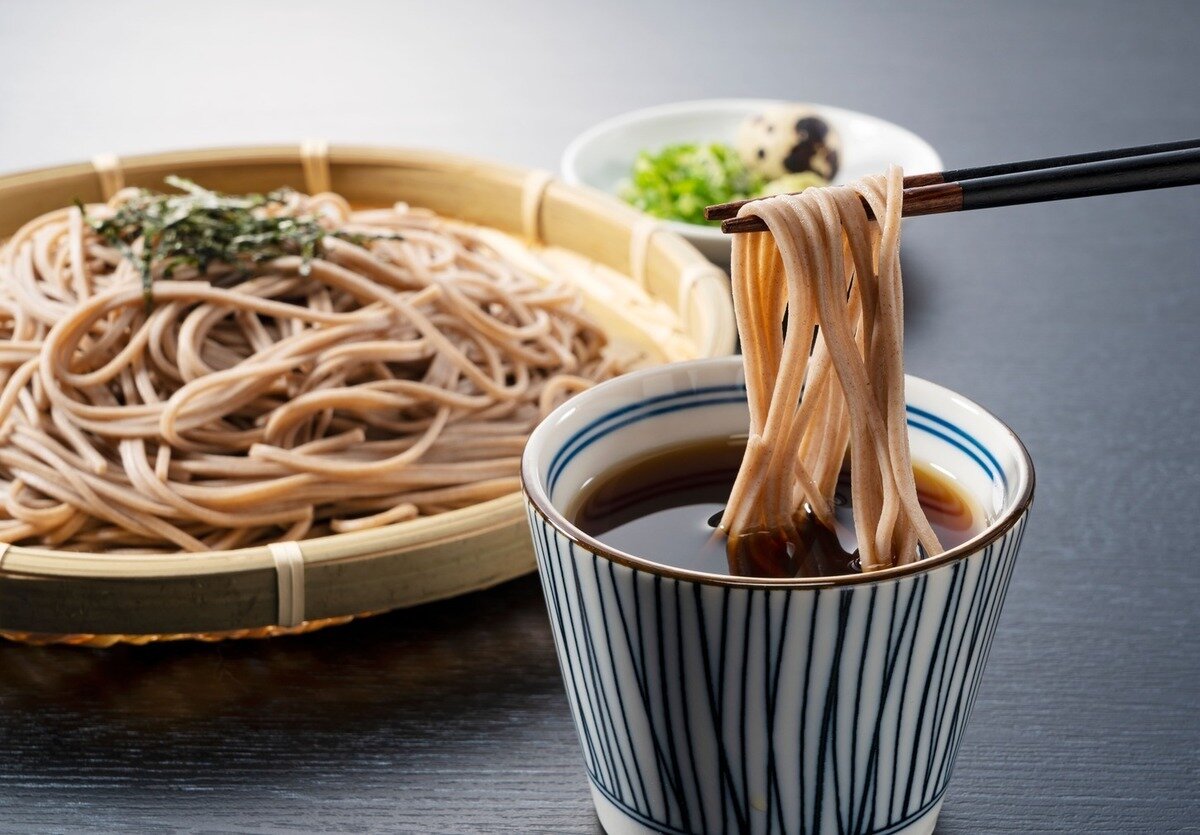
- Zaru Soba: Chilled soba noodles served on a bamboo tray (zaru) with dipping sauce and condiments.
- Soba Salad: Cold soba noodles tossed with various vegetables, proteins, and a flavorful dressing.
Whether you prefer the warmth of a comforting broth or the refreshing coolness of a dipping sauce, soba noodles offer endless possibilities for culinary exploration.
Popular Soba Noodle Dishes
Kake Soba: Hot Soba Noodle Soup
Kake soba is a classic and comforting Japanese noodle soup that features soba noodles in a hot broth. It’s one of the simplest and most beloved soba dishes, perfect for a quick and satisfying meal. The broth, typically made from dashi, soy sauce, and mirin, provides a savory and umami-rich base that complements the nutty flavor of the soba noodles. Kake soba is often garnished with sliced green onions, but you can also add other toppings such as kamaboko (fish cake), seasoned seaweed, or a soft-boiled egg. The beauty of kake soba lies in its simplicity and versatility, allowing you to customize it to your liking. It’s an excellent choice for a cold day or whenever you crave a warm and nourishing bowl of noodles.
Zaru Soba: Cold Soba with Dipping Sauce
Zaru soba is a refreshing and popular cold soba dish that is especially enjoyable during the summer months. It consists of chilled soba noodles served on a bamboo tray (zaru) with a side of dipping sauce called tsuyu. The tsuyu is typically made from dashi, soy sauce, and mirin, and is often served with condiments such as grated daikon radish, wasabi, and green onions. To eat zaru soba, you pick up a small amount of noodles with chopsticks, dip them into the tsuyu, and then slurp them up. The combination of the cold noodles and the flavorful dipping sauce creates a delightful and refreshing experience. Zaru soba is a simple yet elegant dish that showcases the natural flavor of soba noodles.
Yakitori Soba: Stir-Fried Soba Noodles
Yakitori soba is a flavorful andsatisfying stir-fried noodle dish that combines soba noodles with yakitori(grilled chicken skewers) and vegetables. This dish is a delightful fusion ofJapanese flavors and textures, offering a savory and slightly sweet taste. Thesoba noodles are stir-fried with a sauce made from soy sauce, mirin, and sugar,which coats the noodles and vegetables with a delicious glaze. The addition ofyakitori adds a smoky and savory element to the dish, while the vegetablesprovide a crisp and refreshing contrast. Yakitori soba is a versatile dish thatcan be customized with your favorite vegetables and proteins, making it aperfect choice for a quick and easy weeknight meal.
Soba are more than just a food item; they are a cultural icon with a rich historyand diverse culinary applications. From the nutritious buckwheat from whichthey originate to the various ways they can be prepared and enjoyed, sobaoffers a unique and satisfying dining experience. Whether served hot in acomforting broth or cold with a refreshing dipping sauce, soba noodles continueto be a beloved staple in Japanese cuisine and a delightful discovery for foodenthusiasts around the world. Embrace the versatility of soba and explore themany delicious dishes it has to offer, from the simple elegance of zaru soba tothe flavorful complexity of yakitori soba. By understanding the nuances ofsoba, you can appreciate the true essence of this remarkable noodle and elevate your culinaryadventures .


Messenger

Back to top