
Kinmedai, also known as the Golden Eye Snapper or Splendid Alfonsino, is a prized fish in Japanese cuisine, celebrated for its delicate flavor, subtle sweetness, and vibrant color. This deep-sea fish is not only visually appealing but also offers a unique culinary experience that makes it a favorite among chefs and seafood enthusiasts alike. From its distinctive appearance to its versatile applications in various dishes, Kinmedai holds a special place in Japanese gastronomy.
Understanding Kinmedai: The Golden Eye Snapper
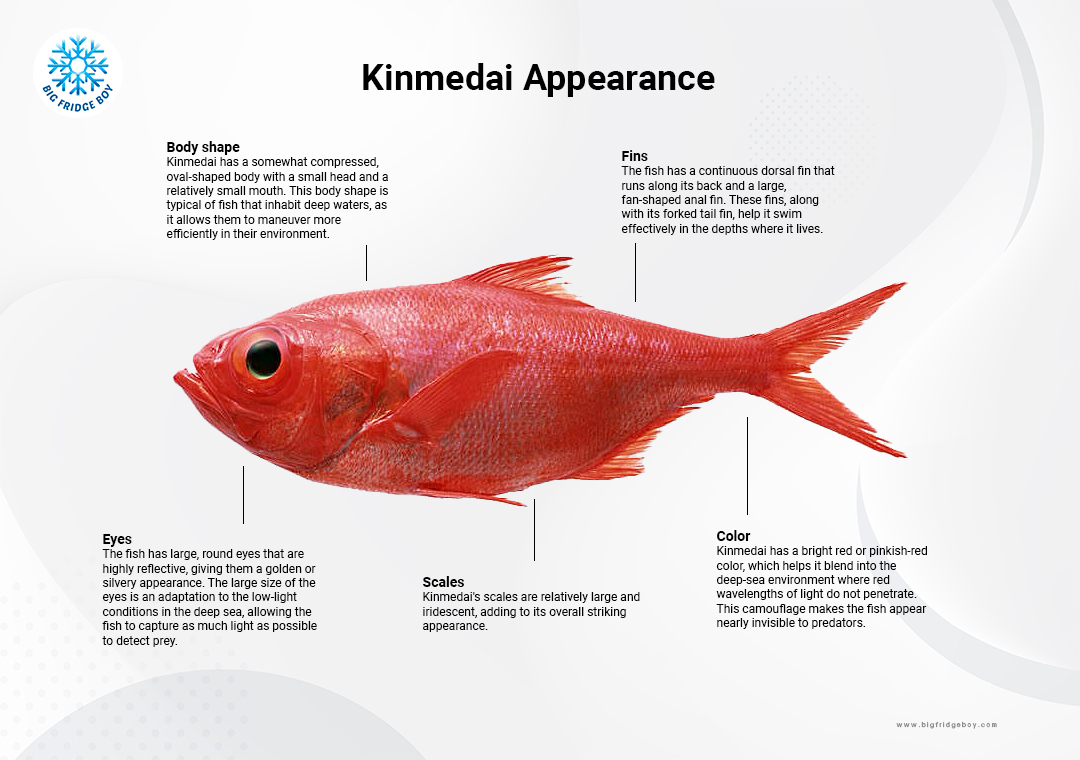
Kinmedai, scientifically known as *Beryx splendens*, is a species of fish belonging to the Berycidae family. Its Japanese name, 金目鯛, translates to “golden eye sea bream,” a nod to its most distinguishing feature: its large, iridescent golden eyes. These eyes are an adaptation to the low-light conditions of the deep sea, where Kinmedai thrives.
Identifying Features of Kinmedai
Kinmedai possesses several key characteristics that make it easily identifiable:
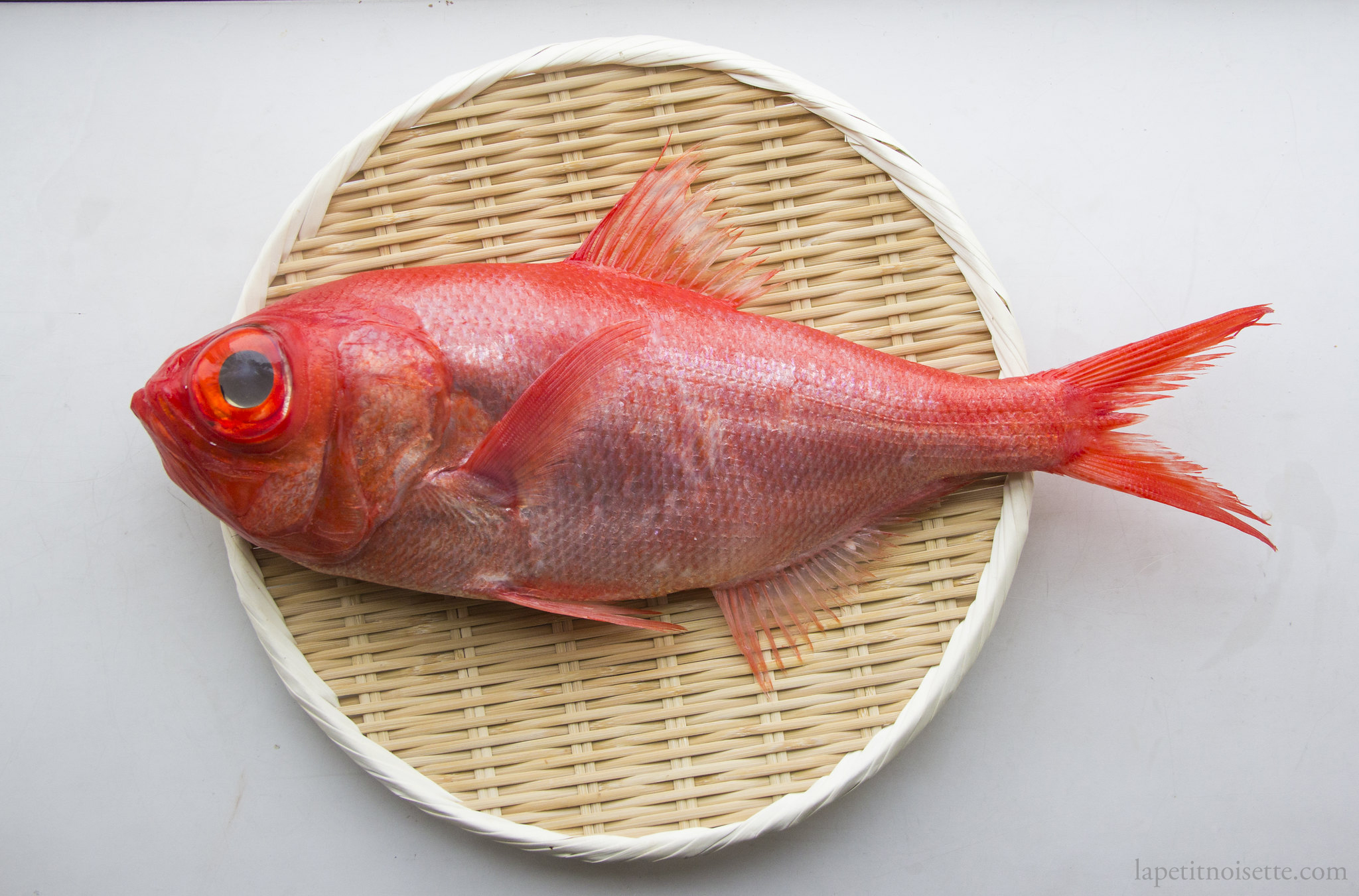
Coloration: Its skin exhibits a bright red to reddish-orange hue, which fades slightly after being caught.
Eyes: Large and luminous golden eyes are the most prominent feature, aiding in deep-sea vision.
Body Shape: The body is oval-shaped and slightly compressed laterally, with a moderately sized mouth.
Size: Kinmedai typically ranges from 20 to 40 centimeters in length, though some individuals can grow larger.
Fins: It has spiny dorsal and anal fins, contributing to its distinctive appearance.
The Habitat and Life Cycle of Kinmedai
Kinmedai is found in deep waters around the world, particularly in the Pacific, Atlantic, and Indian Oceans. They prefer depths ranging from 200 to 800 meters, where they inhabit rocky seabeds and feed on small fish, crustaceans, and squid. The life cycle of Kinmedai is relatively slow, with individuals taking several years to reach maturity. Spawning typically occurs in the warmer months, with females releasing eggs into the water column.
These fish are known for their slow growth and long lifespan, which contributes to their unique flavor profile. Sustainable fishing practices are essential to maintaining healthy populations of Kinmedai.
Kinmedai in Japanese Cuisine and Culture
In Japan, Kinmedai is highly regarded for its culinary versatility and is often featured in high-end sushi restaurants and traditional dishes. Its peak season is during the winter months when the fish accumulates a higher fat content, enhancing its flavor and texture. The appreciation of Kinmedai extends beyond its taste; it is also valued for its aesthetic appeal, with its vibrant red color adding visual appeal to any dish.
Kinmedai's significance in Japanese cuisine is deeply rooted in the country's culinary traditions, where seasonal ingredients and meticulous preparation techniques are highly valued. The fish is often used in celebratory meals and special occasions, symbolizing good fortune and prosperity.
The Culinary Appeal of Kinmedai
The culinary appeal of Kinmedai lies in its unique combination of flavor, texture, and visual presentation. Its high fat content and delicate taste make it a favorite among chefs and diners alike. The fish's versatility allows it to be prepared in various ways, each highlighting its distinct qualities.
Why Kinmedai Is Prized by Chefs
Chefs prize Kinmedai for several reasons:
Flavor Profile: It offers a delicate, slightly sweet flavor with a rich umami undertone.
Texture: The flesh is firm yet tender, providing a satisfying mouthfeel.
Fat Content: Its high fat content contributes to its rich flavor and smooth texture, especially during the winter season.
Versatility: Kinmedai can be used in a variety of dishes, from sushi and sashimi to grilled and simmered preparations.
Visual Appeal: The bright red color of the skin makes it an attractive ingredient, adding elegance to any plate.
The fish's ability to absorb flavors and retain moisture during cooking makes it an ideal ingredient for both traditional and innovative dishes. Chefs often experiment with different techniques to bring out the best in Kinmedai, showcasing its unique characteristics.
Kinmedai as Sushi and Sashimi
Kinmedai is a popular choice for sushi and sashimi, where its delicate flavor and smooth texture can be fully appreciated. When served as sushi, the fish is often lightly seared (aburi) to enhance its aroma and sweetness. The searing process also adds a subtle smoky flavor that complements the fish's natural taste.
As sashimi, Kinmedai is typically sliced thinly to highlight its texture and allow the diner to fully experience its subtle flavors. A dab of wasabi and a touch of soy sauce are often added to enhance the taste without overpowering the fish's natural sweetness. The visual appeal of the bright red flesh against the white rice makes Kinmedai sushi and sashimi a feast for the eyes as well as the palate.
Other Creative Uses of Kinmedai in Cooking
Beyond sushi and sashimi, Kinmedai can be used in a variety of other creative dishes. Here are a few examples:
Grilled Kinmedai: Grilling brings out the fish's natural sweetness and adds a smoky flavor.
Simmered Kinmedai: Simmering in a flavorful broth allows the fish to absorb the surrounding flavors, creating a rich and savory dish.
Kinmedai Carpaccio: Thinly sliced and served with a light vinaigrette, Kinmedai carpaccio is a refreshing and elegant appetizer.
Kinmedai with Citrus: Pairing Kinmedai with citrus fruits like yuzu or lemon enhances its flavor and adds a bright, acidic note.
Kinmedai Tempura: Lightly battered and deep-fried, Kinmedai tempura is a crispy and flavorful treat.
These diverse applications demonstrate the versatility of Kinmedai and its ability to shine in various culinary contexts. Whether grilled, simmered, or served raw, Kinmedai offers a unique and delightful dining experience.
Purchasing and Storing Kinmedai
To fully enjoy Kinmedai, it is essential to purchase high-quality fish and store it properly. Knowing where to buy fresh Kinmedai, how to select the best specimens, and how to store it correctly can make a significant difference in the final culinary outcome.
Where to Buy Fresh Kinmedai
Fresh Kinmedai can be purchased from a variety of sources:
Specialty Fish Markets: These markets often carry a wide selection of fresh seafood, including Kinmedai.
Japanese Supermarkets: Supermarkets specializing in Japanese products are a reliable source for high-quality Kinmedai.
Online Seafood Retailers: Numerous online retailers offer fresh Kinmedai, often with overnight shipping options to ensure freshness.
Directly from Fishermen: In some coastal areas, it may be possible to purchase Kinmedai directly from local fishermen.
When purchasing Kinmedai, it is important to consider the source and ensure that the fish is handled properly to maintain its quality and freshness. Look for retailers with a reputation for selling high-quality seafood and who prioritize sustainable fishing practices.
How to Select High-Quality Kinmedai
Selecting high-quality Kinmedai involves examining several key characteristics:
Appearance: The skin should be bright red and shiny, with no signs of discoloration or dryness.
Eyes: The eyes should be clear, plump, and slightly bulging, indicating freshness.
Smell: The fish should have a fresh, sea-like smell, with no strong or fishy odor.
Texture: The flesh should be firm and elastic, springing back when touched.
Gills: The gills should be bright red and moist, not slimy or discolored.
Avoid purchasing Kinmedai that appears dull, has sunken eyes, or emits a strong odor, as these are signs of spoilage. Fresh Kinmedai should be handled with care and kept refrigerated until ready to use.
Proper Storage Techniques for Kinmedai
Proper storage is crucial for maintaining the quality and freshness of Kinmedai:
Use Promptly: Consume Kinmedai within 1-2 days of purchase for the best quality and flavor.
By following these storage techniques, you can ensure that your Kinmedai remains fresh and flavorful, allowing you to fully appreciate its unique culinary qualities. Whether you plan to use it for sushi, sashimi, or another creative dish, proper storage is essential for preserving its taste and texture.
Kinmedai, the Golden Eye Snapper, is a remarkable fish that offers a unique and delightful culinary experience. From its distinctive appearance and habitat to its versatile applications in Japanese cuisine, Kinmedai is a prized ingredient that is valued for its flavor, texture, and visual appeal. Whether you are a seasoned chef or a home cook, exploring the world of Kinmedai can open up new culinary horizons and allow you to appreciate the intricacies of Japanese gastronomy. By understanding its characteristics, culinary uses, and proper handling techniques, you can fully savor the exquisite qualities of this exceptional fish and create memorable dining experiences.


Messenger

Back to top